
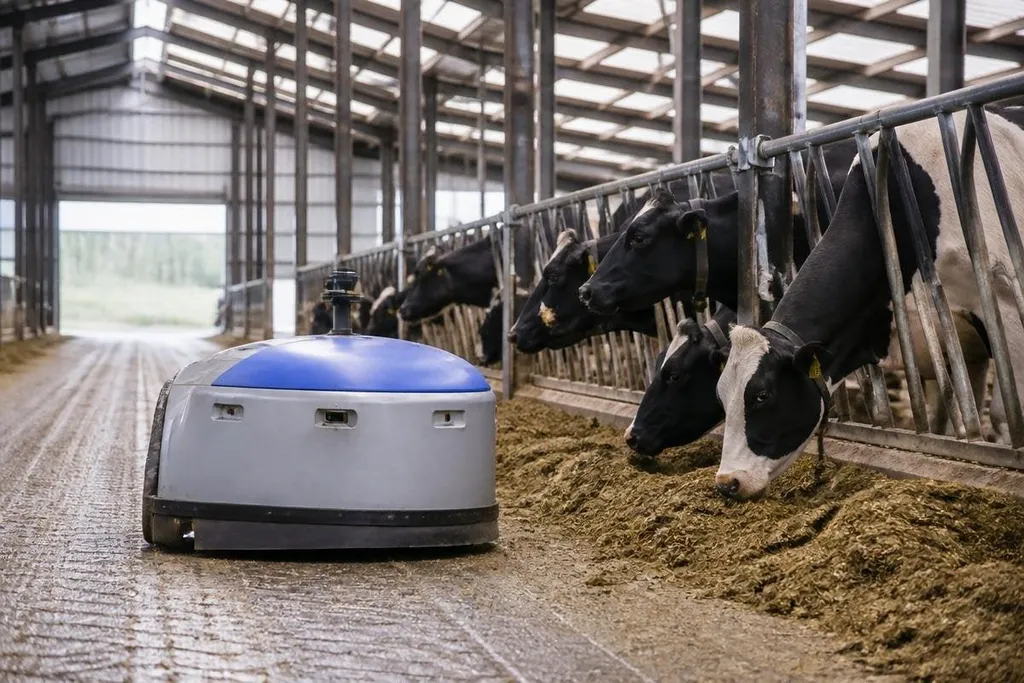
The supplied brief contains no evidence pack: zero named farms, robot models, prices, dates, or measured results. That leaves one useful answer to the question behind this topic: the biggest developments to watch are the ones that publish proof.
Quick read
- No verified deployment or test is supplied here.
- A credible claim needs a named machine, site, date, and result.
- Farm buyers should ask what happens after the demo.
Start with the farm task
Livestock robotics covers many jobs, and each needs a different test. A system that moves feed faces different conditions from one that checks animals or cleans a working area. Treating them as one market hides the detail a buyer needs.
The first question is practical: what job does the robot do, and how often does it do that job without a person taking over? A report that answers only with words such as “autonomous” leaves out the part that affects labor, uptime, animal handling, and repair work.
A useful article needs a named task and a clear result. That could mean the number of animals handled, the hours run, the amount moved, or the rate of human intervention. None of those figures appears in the supplied material, so they can't be added here.
Proof should follow the claim
A product page can describe sensors, wheels, arms, software, or a control system. Those details explain how the machine may work, but they don't show whether it works on a farm through dust, mud, weather changes, uneven ground, or contact with animals.
The missing evidence matters more than a long feature list. A useful report would name the farm, the company, the robot, the test period, and the result. It would also say what failed, how often a worker stepped in, and what the farm paid.
Farm buyers need evidence tied to a real herd and work shift. Livestock robotics coverage can place the farm, robot model, task, test dates, worker input, and measured result beside each claim, so the next section can test whether a demo holds during daily animal care.
A demo still has value when its limits are clear. The report should say if the clip was recorded on a prepared surface, if a person controlled the robot, and if the task ran once or many times. Without that detail, the reader can't compare the claim with a real farm shift.
The business case is still open
A robot can work as shown and still fail as a purchase. The cost includes the machine, setup, software, power, repairs, training, and any work a person must do around it.
The supplied material gives no price or operating cost, so no payback claim can be made. The same gap applies to safety and animal welfare.
A serious account needs the machine's operating limits, its stop method, and the conditions under which a worker must take control. It should also name any inspection, field trial, or safety review behind those claims.
I'd wait for farm records before calling any livestock robot a major advance. A working demo is a starting point; a repeatable result on a named site is the evidence that changes a buying decision.
A buyer's evidence check
Use this list when a vendor or news report presents a new livestock robot:
- Name the site: Find the farm, country, task, and date of the trial.
- Check the task: Ask what the robot did without remote control or manual recovery.
- Count human input: Record how often workers corrected, moved, cleaned, or reset it.
- Price the full setup: Include hardware, software, installation, training, and repairs.
- Read the limits: Look for weather, ground, animal, load, speed, and safety limits.
- Ask for repeat results: One successful run cannot show daily farm performance.
The next credible livestock robotics watch list should contain fewer claims and more records: a named robot, a named farm, a measured task, a real cost, and a clear account of what still needs a person.